
San Francisco, CA: Dodge AI has raised $2.65 million in a funding round led by Accel and Google’s venture arm to build an AI control plane for enterprise application maintenance.
The platform resolves incidents and change requests across systems such as SAP and Salesforce while turning undocumented exceptions and customizations into a source of truth for production agents.
Enterprise software is never finished. Once platforms such as SAP, Salesforce, Oracle or Microsoft Dynamics go live, businesses continue to evolve, with thousands of company-specific rules built into these systems over the years.
When something breaks, the required information is rarely available in one place. Keeping enterprise systems running costs companies more than $600 billion a year.
Dodge AI is aiming to change how this work is handled through an AI platform that resolves incidents and change requests across enterprise applications while documenting the custom logic that makes each system unique.
The funding round was led by Accel and Google’s venture arm, with participation from New Build Venture Capital, Antler, Schema Ventures and angels from the SAP ecosystem.
Why Dodge AI Is Targeting Enterprise Maintenance
For decades, enterprise application maintenance has largely been handled through large system integrators such as Accenture, TCS and IBM.
The standard approach has involved deploying teams of 20 to 50 people offshore to manage incidents, change requests, background jobs and everyday operational issues that keep enterprise systems running.
According to Dodge AI, while this model keeps enterprise applications operational, it also creates a deeper problem. Fixes can remain undocumented, customizations accumulate and technical debt compounds inside systems of record.
Over time, enterprises can become increasingly dependent on their maintenance partners because knowledge about how their systems actually work can remain distributed across tickets, consultants, configuration layers and individual memory.
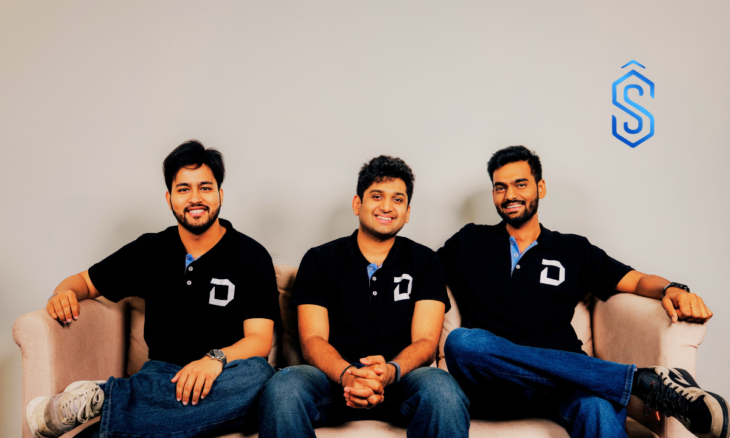
“For a long time, the only way to maintain enterprise systems was to add more people,” said Rebhav Bharadwaj, Co-Founder and CEO of Dodge AI. “We believe long-horizon agents can change that.
Dodge AI gives enterprises the ability to continuously improve & heal their mission critical systems so incidents can be resolved faster, technical debt can be understood, and the knowledge trapped inside maintenance work can become the foundation for future transformation.”
Also Read: Autoheal Raises $7.9M Seed Round Led by Innovation Endeavors
What Dodge AI Is Building
Dodge AI is developing a platform that acts as a control plane across enterprise applications, including SAP, Salesforce, Microsoft Dynamics, Kinaxis and Oracle JDE, along with other systems that form the core of large organizations.
The platform connects across business processes, ERP customizations, ITSM systems and legacy configurations to identify root causes, recommend fixes and accelerate modernization.
Dodge AI is also designed to become a source of truth for agents operating in production environments. In enterprise systems, some of the most important operational knowledge exists in exceptions, including why a particular warehouse allocates inventory differently, why one pricing rule overrides another or why a background job runs only at night.
“Frontier models are incredibly capable, but enterprise adoption still requires significant hill climbing. Dodge AI captures the necessary rules and exceptions for this – while self healing your systems instead of an endless transformation project.” said Aditya Thakur, Co-Founder and CTO, of Dodge AI
Dodge AI’s Enterprise Traction
Dodge AI is already working with more than a dozen enterprises, half of which are publicly listed companies, on incident management and process optimization across technology stacks including SAP, Kinaxis and Microsoft Dynamics.
The platform fields hundreds of queries every hour, giving Dodge AI a growing view into how enterprise systems fail and the patterns that drive recurring maintenance work.
“Enterprises see what AI can do, but legacy IT keeps them stuck in maintenance mode. Within days of working with us, that burden lifts – and they can focus on the bigger picture.” said Aditya Patil, COO of Dodge AI.
The company cited several examples of how its platform is being used to address enterprise application issues.
In one instance, a truck could not load at a warehouse because a Goods Receipt Note was printing incorrect information. Dodge AI traced the fault across SAP, Kinaxis and internal warehouse software and delivered a fix within minutes.
In another case, a customer had been running inventory planning overnight because SAP repeatedly crashed when the process was run in the morning.
Dodge AI modernized the process, making it 132x faster, freeing the team of 10 people maintaining it and improving order allocation time by eight hours.
Dodge AI’s Next Phase
Dodge AI sees application maintenance as an entry point to a broader change in enterprise IT.
Companies want to modernize their technology environments, but CIOs cannot risk disrupting systems that already work, while tight budgets are often consumed by daily incidents.
According to the company, solving maintenance first can free IT teams from constant firefighting and provide a path toward modernization.
The same exception intelligence used to resolve incidents can also enable production agents to operate safely inside mission-critical enterprise systems.
“Application maintenance is one of the largest and least modernized categories in enterprise technology,” said Prayank Swaroop, investor at Accel.
“Dodge AI is taking on the work that keeps the world’s most important systems running every day. By starting with maintenance, the team is building the context layer enterprises need before agents can safely operate in production.”
The company is now expanding further into the maintenance layer, focusing on the exceptions, configurations and operational logic that define how individual enterprises operate.
Dodge AI is positioning this hidden enterprise intelligence as the operating manual for agents that will operate enterprise IT, with application maintenance serving as the starting point for automating mission-critical systems.